
Eng
Eng
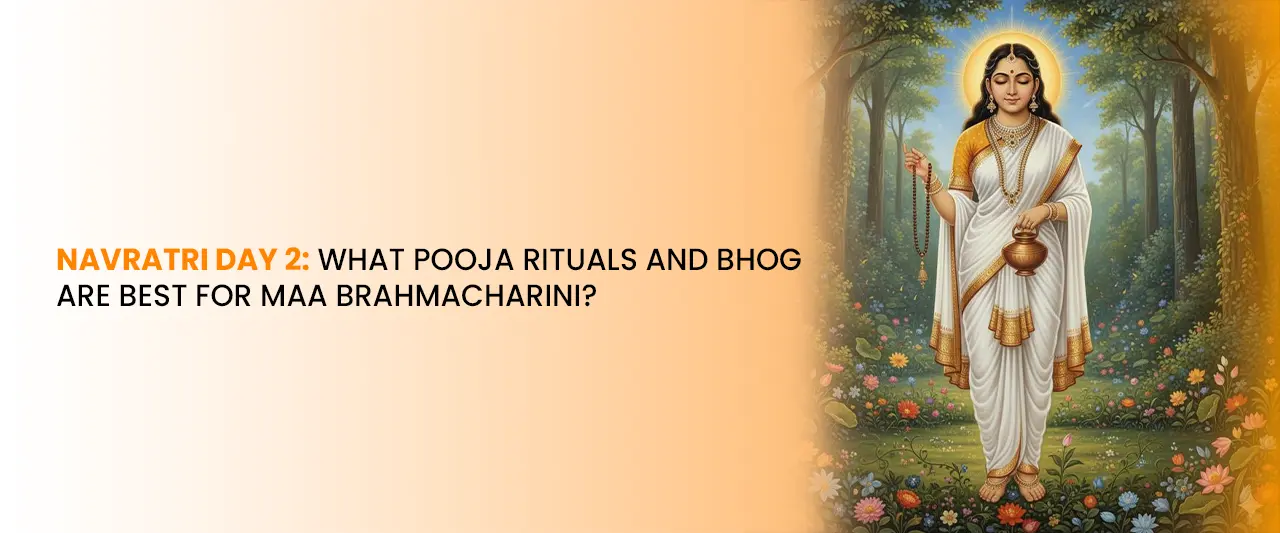
Navratri is a sacred nine-day festival dedicated to the worship of Goddess Durga and her nine powerful forms. The second day of Navratri is devoted to Maa Brahmacharini, a symbol of devotion, wisdom, and spiritual discipline. According to Vedic astrology, worshipping Maa Brahmacharini on this day is believed to bring mental strength, patience, and spiritual growth.
During Navratri, many devotees follow specific rituals, offer bhog, and perform prayers to connect with divine energy. Through Online astrology, people also try to understand how these sacred rituals can influence their kundli, horoscope, and spiritual journey.
At Astroindusoot, we believe that understanding the spiritual and astrological meaning of Navratri rituals can help individuals bring positivity, focus, and balance into their lives.
Maa Brahmacharini is the second form of Goddess Durga worshipped on the second day of Navratri. The name “Brahmacharini” means someone who follows a path of deep meditation and spiritual discipline.
According to mythology, Maa Brahmacharini performed intense penance to obtain Lord Shiva as her husband. Because of this devotion and determination, she represents patience, self-control, wisdom, and dedication.
Her form is simple yet powerful:
Her calm and focused appearance represents the power of inner strength and spiritual determination.
In Vedic astrology, the worship of Maa Brahmacharini is believed to strengthen determination and mental clarity. This day is especially considered helpful for people who are seeking spiritual growth or trying to overcome challenges in life.
Some astrologers believe that praying on this day can help:
Many devotees also consult the Best astrologer in India to understand how Navratri rituals may positively influence their kundli and planetary energies.
Performing the pooja with devotion and purity is the most important part of Navratri worship. The rituals for Maa Brahmacharini are simple but spiritually meaningful.
Begin by cleaning the house and especially the pooja area. According to vastu principles, a clean and organized space attracts positive spiritual energy.
Decorate the altar with:
Place the idol or picture of Maa Brahmacharini near the Navratri Kalash.
Light a ghee diya and incense sticks to begin the pooja. Offer fresh flowers, kumkum, and rice to the Goddess while praying with devotion.
Chanting mantras or Durga Saptashati is also considered auspicious during Navratri.
Many devotees learn these rituals through Top astrology services that explain the spiritual and astrological meaning behind Navratri practices.
Devotees often chant the following mantra during pooja:
“Om Devi Brahmacharinyai Namah”
Chanting this mantra helps create calmness and strengthens spiritual discipline.
Food offerings are an important part of Navratri worship and symbolize devotion and gratitude.
Maa Brahmacharini is believed to prefer simple and pure food offerings.
Offering sugar or mishri is considered very auspicious on the second day of Navratri. It symbolizes sweetness in life and is believed to bring happiness.
Fresh fruits like bananas, apples, and pomegranates can be offered as prasad.
Kheer, peda, or other milk-based sweets are also commonly offered to Maa Brahmacharini.
Panchamrit made with milk, curd, honey, ghee, and sugar is another sacred offering during Navratri pooja.
After the pooja, the prasad is distributed among family members as blessings from the Goddess.
The second day of Navratri teaches an important spiritual lesson — patience and dedication lead to success.
Maa Brahmacharini represents:
By worshipping her, devotees seek the strength to face life’s challenges with calmness and courage.
Many people choose to Talk to astrologer online during Navratri to understand how spiritual practices can improve their horoscope and life path.
Combining astrology with vastu can enhance the positive energy of Navratri worship.
Helpful vastu tips include:
At Astroindusoot, we often suggest that combining vastu principles with devotional practices can create a more harmonious environment at home.
Astroindusoot provides guidance based on traditional Vedic astrology and spiritual wisdom.
Through horoscope and kundli analysis, people can understand:
Navratri is considered a powerful period for spiritual transformation, and proper guidance can help individuals use this time positively.
Navratri Day 2 dedicated to Maa Brahmacharini represents devotion, patience, and spiritual discipline. By performing pooja with sincerity and offering simple bhog like sugar, fruits, or milk sweets, devotees seek blessings for peace, strength, and wisdom.
Understanding the deeper spiritual meaning of Navratri through Vedic astrology helps individuals connect more deeply with the festival. It reminds us that faith, patience, and determination are powerful forces that can guide us through life’s challenges.
Maa Brahmacharini is the second form of Goddess Durga worshipped on the second day of Navratri.
Sugar, mishri, fruits, milk sweets, and panchamrit are commonly offered.
She symbolizes devotion, patience, spiritual discipline, and determination.
According to vastu principles, the northeast or east direction is considered ideal for pooja.
Yes, many people believe Navratri worship helps create positivity, mental strength, and spiritual growth.