
Eng
Eng
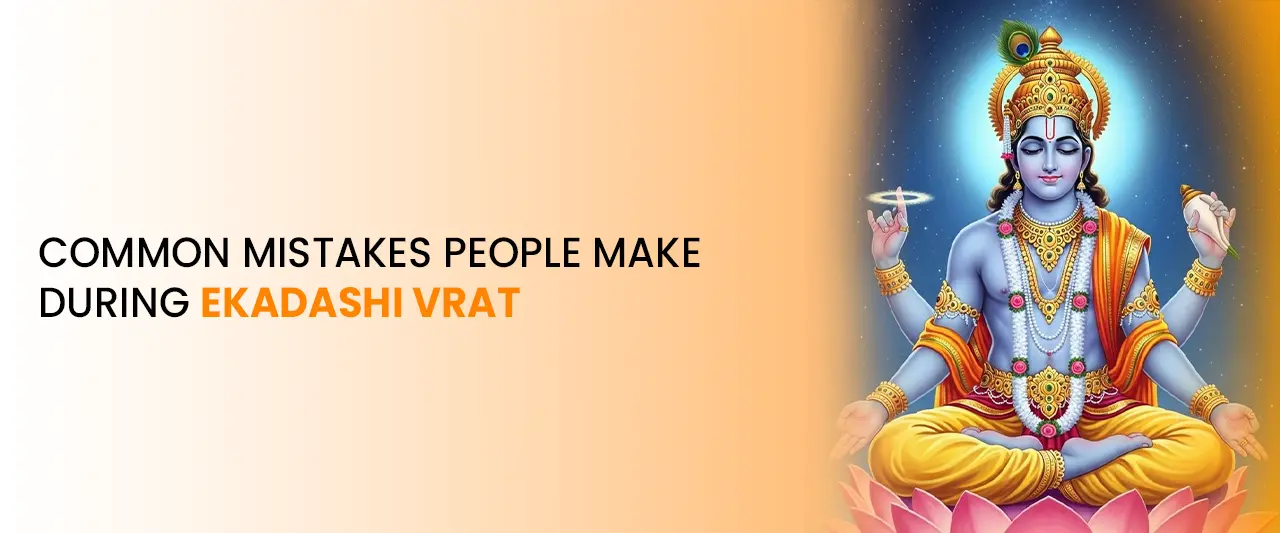
Ekadashi Vrat is one of the most sacred fasting observances in Hindu tradition, dedicated to Lord Vishnu. Observed twice a month on the eleventh day of the lunar cycle, this vrat is believed to purify the mind, cleanse past karmas, and bring spiritual growth.
According to Vedic astrology, Ekadashi is a powerful day for controlling desires, detoxifying the body, and elevating consciousness. However, many devotees unknowingly make mistakes while observing the fast, which can reduce its spiritual benefits.
Understanding the correct way to observe Ekadashi can help you receive its full blessings and spiritual rewards.
Let’s explore the most common mistakes people make during Ekadashi Vrat and how to avoid them.
Many people focus only on avoiding food but forget the spiritual purpose of the vrat.
Ekadashi is meant for:
• self-discipline
• devotion and prayer
• mental purification
• detachment from material distractions
Without devotion and mindful awareness, fasting becomes only a physical exercise rather than a spiritual practice.
One of the most common mistakes is eating foods that are traditionally avoided during Ekadashi.
Foods generally avoided include:
• rice and grains
• lentils and pulses
• wheat-based items
• certain spices and processed foods
Instead, devotees consume fruits, milk, nuts, and vrat-friendly ingredients like sabudana or buckwheat.
Eating large quantities of “fast-approved” foods defeats the purpose of fasting.
The vrat encourages moderation and control over cravings. Overeating can lead to lethargy and reduce spiritual focus.
The goal is purification, not indulgence.
Ekadashi is not just about food restrictions — it is about controlling thoughts, emotions, and speech.
Avoid:
• anger and arguments
• negative thinking
• gossip or harsh words
• excessive screen time and distractions
Practicing silence, prayer, and meditation enhances the vrat’s spiritual impact.
Many devotees fast but neglect essential rituals such as early bathing, prayer, or chanting.
Spiritual practices to include:
• morning purification bath
• chanting Vishnu mantras
• reading sacred texts
• lighting a diya and offering prayers
Devotion strengthens the energy of the vrat.
Ekadashi encourages spiritual alertness and mindfulness.
Oversleeping reduces spiritual awareness and wastes the opportunity for prayer and introspection.
Use this day for self-reflection, meditation, and devotional activities.
Breaking the fast incorrectly can reduce its benefits.
Parana should be done:
• at the correct time the next day
• with light, sattvic food
• after offering prayers
Following proper timing preserves the spiritual energy of the vrat.
In Vedic astrology, Ekadashi is considered highly auspicious for cleansing karmic patterns and calming the mind. Observing the vrat properly can:
• purify mental and emotional energies
• reduce negative karmic influences
• enhance spiritual awareness
• strengthen self-control
• promote inner peace
Many devotees seek guidance from the best astrologer in India or use online astrology platforms to understand the deeper spiritual and karmic importance of Ekadashi fasting.
• begin the day with prayer and gratitude
• keep your thoughts calm and positive
• engage in chanting or meditation
• stay hydrated and maintain balance
• practice compassion and kindness
If you want personalized guidance, you can talk to an astrologer online to understand how Ekadashi fasting can support your spiritual growth.
Ekadashi Vrat is more than a ritual — it is a sacred opportunity for inner cleansing, spiritual discipline, and divine connection. Avoiding common mistakes ensures that your fast becomes a transformative experience rather than a routine practice.
By observing Ekadashi with devotion, mindfulness, and proper discipline, you invite peace, clarity, and spiritual upliftment into your life.
May this sacred vrat guide you toward purity, balance, and divine blessings.
The vrat helps purify the mind, control desires, and promote spiritual growth.
Yes, many devotees follow a water fast or consume fruits and milk depending on their capacity.
Traditionally, grains are believed to carry heavier energy and are avoided for spiritual purification.
The fast should be broken the next day at the prescribed time with light sattvic food.
According to Vedic beliefs, sincere observance helps cleanse karmic patterns and enhance spiritual awareness.